
How Artificial Intelligence Is Transforming Software Testing
November 23, 2026 · 6 min read · Bijon Saha
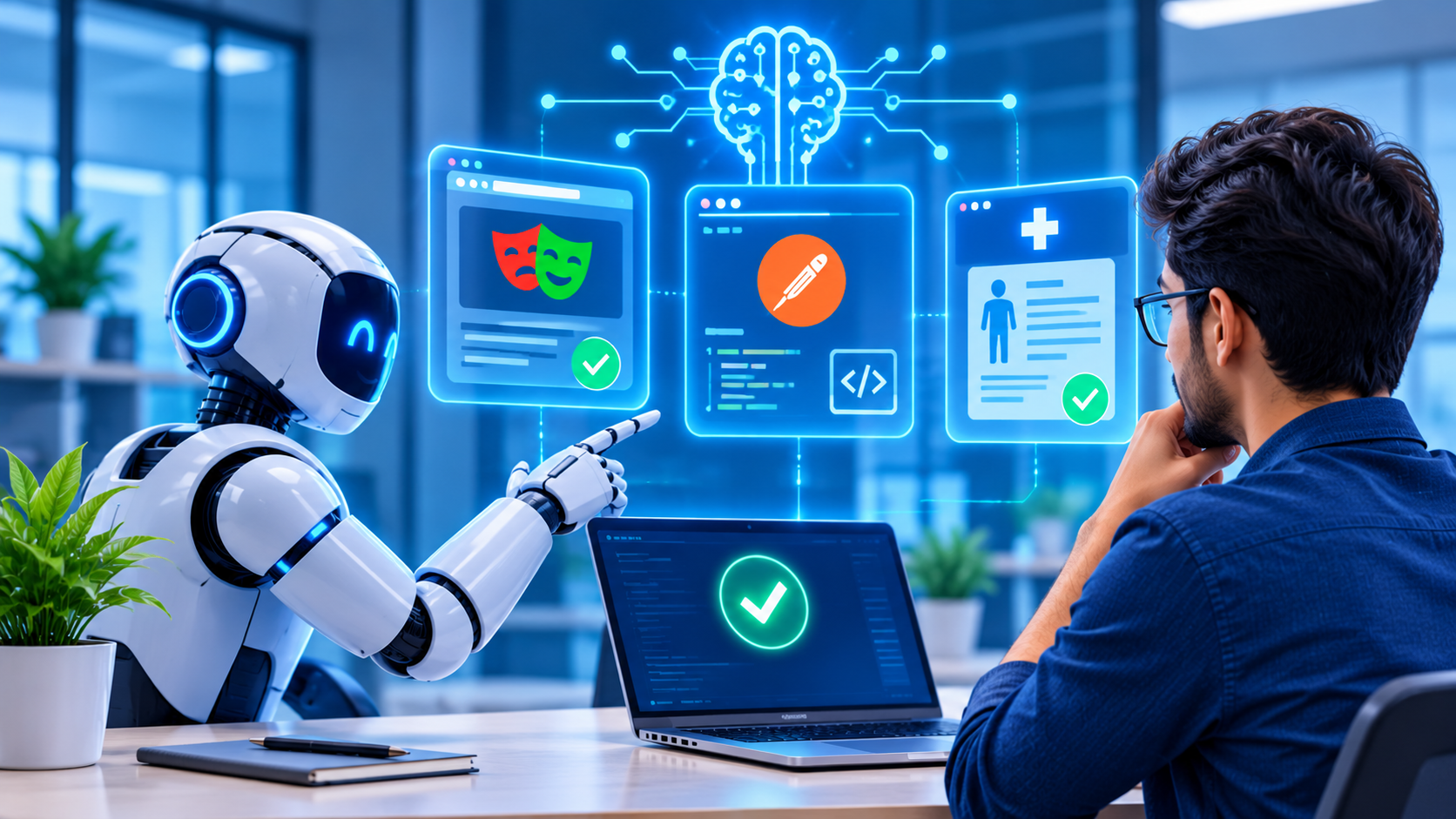
Software is becoming more advanced day by day. From mobile applications to web platforms and enterprise systems, people rely on software for almost every part of their lives. But behind every successful application, things become more complex. Traditional testing method alone are no longer enough to keep up with the growing demand for speed, accuracy and reliability. This is where Artificial Intelligence is beginning to make a significant difference.
AI is changing the way software is tested, helping QA engineers work more efficiently, identify potential issues earlier, and improve overall software quality. Rather than replacing traditional testing, AI is introducing smarter ways to approach it.
The shift from Traditional Testing to Intelligent Testing
Traditionally, software testing has depended heavily on manual effort and predefined automation scripts. QA engineers create test cases, execute them, compare actual results with expected results, and report any issues they discover. Although these methods remain essential, they can become time consuming when applications grow larger and receive frequent updates.
Just imagine an application that receives new features every week. Every update requires testing to ensure that existing functionality still works correctly. Running the same test cases repeatedly can consume valuable time and resources.
Now AI introduces a more intelligent approach. It can analyze application behavior, identify patterns, suggest test scenarios, and help prioritize areas that need attention. This allows testing teams to spend less time on repetitive activities and more time understanding complex problems that require human judgment.
Smarter Test Case Generation
Writing test cases is one of the most important responsibilities of a QA engineer. It requires understanding business requirements, identifying possible scenarios, and thinking about how users might interact with an application.
AI can make this process easier by analyzing requirements, user stories, and application behavior to suggest relevant test scenarios. For example, when testing a login feature, AI can help identify scenarios involving valid credentials, incorrect passwords, empty fields, account restrictions, and unusual input combinations.
However, AI generated test cases are not automatically correct or complete. QA engineers still need to review them, validate the business logic, and ensure that important scenarios are not overlooked. AI works best as an assistant that supports the testing process rather than making every testing decision independently.
Faster Bug Detection and Analysis
Finding bugs is not always difficult, but understanding why they happen can be challenging. Sometimes an application behaves differently under specific conditions, and reproducing the issue requires several attempts.
AI can help analyze test execution results, application logs, and historical defect patterns to identify unusual behavior. It can also assist in grouping similar failures and highlighting areas that may need further investigation.
For example, if a healthcare application occasionally displays incorrect assessment information, AI-assisted analysis could help identify patterns in the failures, such as specific workflows, input combinations, or application versions. This can give QA engineers useful starting points when investigating the problem.
The final investigation still requires human verification, but AI can help reduce the time spent searching through large amounts of information.
Improving API and Performance Testing
Modern applications depend on APIs to exchange information between different services. Ensuring that these APIs work correctly is essential for maintaining application reliability.
AI can assist QA engineers in generating API test scenarios, analyzing response data, identifying unusual response patterns, and suggesting additional validation cases. It can also help examine large volumes of test results to identify potential performance problems.
For example, an API may return a successful HTTP status code while still providing incorrect or incomplete information. AI assisted analysis can help highlight inconsistencies that deserve further investigation. However, proper assertions and business-rule validation are still necessary to confirm whether the response is correct.
In performance testing, AI can also help analyze response times, resource usage, and historical performance data to identify possible bottlenecks.
Why Human QA Engineers Still Matter
The answer is not that simple. AI can automate repetitive activities, analyze large datasets, and suggest potential problems, but software quality involves much more than identifying technical errors.
A QA engineer needs to understand how real users interact with an application, whether a feature meets business expectations, and whether the overall experience makes sense. These responsibilities require critical thinking, creativity, communication, and domain knowledge.
Consider a healthcare application where a feature technically works but displays information in a confusing way. An automated system might consider the test successful because the expected response was received. A human QA engineer, however, may recognize that the feature could create confusion for doctors or patients.
This is why human expertise remains essential. The future of QA is not about choosing between humans and AI; it is about combining their strengths.
The Future of Software Testing
We are also seeing growing interest in AI agents that can interact with applications, execute testing workflows, analyze results, and report potential issues with less manual intervention.
However, adopting AI does not automatically guarantee better software quality. Organizations still need proper testing strategies, reliable data, skilled QA professionals, and human oversight to ensure that AI-generated results are accurate and meaningful.
Applications of AI Agents in My Daily Testing Workflow
One of the most interesting changes in my testing workflow has been the use of AI agents to assist with automation and data validation. Instead of relying entirely on manually written scripts, I have started exploring how AI agents can help turn testing requirements into practical automation workflows.
For web application testing, I use AI agents to help create and execute Playwright scripts. These scripts interact with web applications, perform different user actions, and collect execution results. This approach helps reduce the effort required to build automation workflows and makes it easier to investigate application behavior.
I also use AI assistance when working with Postman scripts for API testing. From writing JavaScript-based test scripts to validating response data, checking status codes, and handling different response scenarios, AI agents help simplify scripting tasks and speed up the API testing process. This allows me to focus more on validating business logic and identifying unexpected API behavior.
Another area where I find AI-assisted testing particularly useful is data consistency validation. In healthcare applications, accurate patient information is extremely important. Even a small mismatch between what appears on the website and what the back-end API returns can lead to incorrect information being displayed.
To address this challenge, I am also developing a system that compares patient reports displayed on the web application with the corresponding API responses. The purpose is to identify missing data, mismatched values, or inconsistencies between the two sources. This helps make the validation process more systematic and reduces the possibility of overlooking important differences during manual verification.
These experiences have shown me that AI agents can be valuable testing assistants. They can help QA engineers build automation workflows, write API test scripts, investigate application behavior, and validate complex data. However, the responsibility for reviewing results, understanding business requirements, and confirming actual defects still belongs to the QA engineer.
For me, the real advantage of AI in software testing is not replacing human effort entirely, but making that effort more productive, accurate, and focused.
Final Thoughts
Artificial Intelligence is not simply another technology trend in software testing. It represents a meaningful shift in how development teams approach quality, efficiency, and reliability.
By reducing repetitive work, supporting intelligent automation, and helping engineers identify potential issues faster, AI is creating new opportunities for better software testing. At the same time, human judgment and technical expertise remain at the heart of quality assurance.
Ultimately, the goal is not to replace QA engineers with AI. It is to empower them with better tools so they can focus on what matters most: delivering reliable, secure, and user-friendly software.

Comments
No comments yet. Start the conversation.